Introduction
Building or renovating a home involves hundreds of decisions, and knowing which plywood is best for home interiors is one of the most important. Whether you are planning wardrobes for the bedroom, a TV unit for the living room, a modular kitchen, bathroom storage or a home office, the plywood used inside the furniture directly affects its strength, durability and long-term performance.
Many homeowners assume that one plywood grade is suitable for the entire house. This often leads to unnecessary expenses or furniture that is not designed for the conditions in which it will be used. A bedroom wardrobe, for example, does not face the same environment as a kitchen cabinet exposed to steam or a bathroom vanity located near plumbing.
The right approach is to understand how each room is used and then choose plywood that matches those conditions. Moisture exposure, humidity, fire-safety requirements, furniture design and expected load all influence the selection process.
Advance Ply manufactures a complete range of engineered plywood products for residential, commercial and institutional interiors. Depending on the application, the range includes Marine Grade, BWR Grade, MR Grade, Fire Retardant and Flexible Plywood manufactured using technologies such as HVRT Technology, HEXAPRO Process, calibrated construction, four-times hydraulic pressing, product-specific resin systems and specialised preservative treatments where applicable.
This guide explains which plywood is best for home interiors room by room, the differences between plywood grades, how to avoid common buying mistakes and how to make informed decisions before furniture fabrication begins.
Why Every Room Does Not Need the Same Plywood?
Deciding which plywood is best for home use starts with the room, because every room inside a house experiences different environmental conditions.
A living room generally remains dry throughout the year, while a bathroom is continuously exposed to humidity. Kitchens experience cooking steam and occasional water exposure, whereas study rooms and bedrooms remain relatively stable. Using the same plywood specification throughout the house may therefore not always be the most suitable solution.
Instead of selecting plywood based only on price or popularity, evaluate:
- Moisture exposure
- Humidity levels
- Fire-safety requirements
- Furniture application
- Structural load
- Indian Standard certification
- Expected service life
Selecting plywood according to these factors helps ensure the furniture is designed for the conditions in which it will be used.
Understanding Different Plywood Grades
Before choosing plywood for individual rooms, it is useful to understand the common plywood grades available for interior applications.
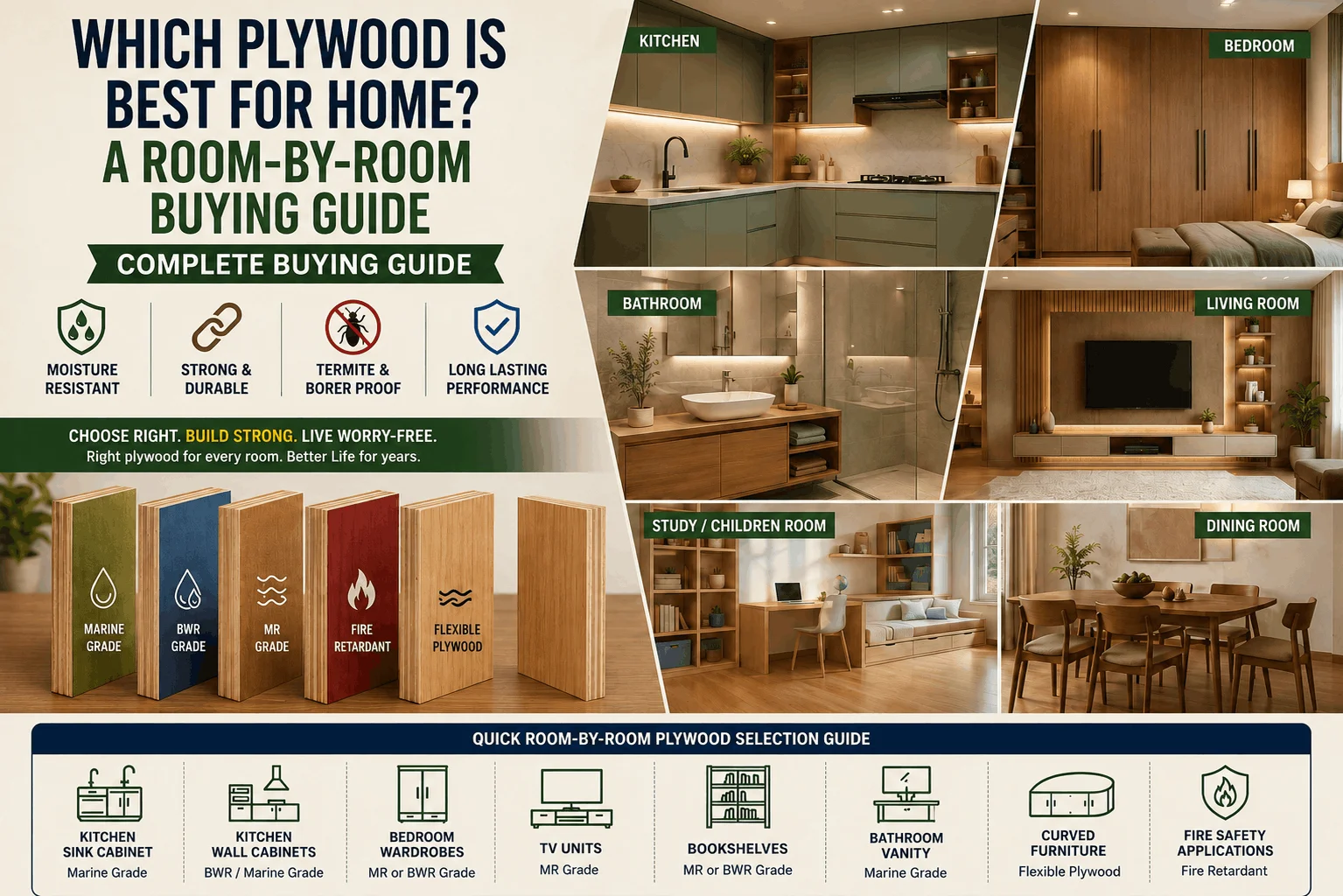
MR (Moisture Resistant) Grade Plywood
MR (Moisture Resistant) Grade plywood is generally used for furniture installed in dry interior environments. It is commonly selected for wardrobes, TV units, study tables, beds, storage cabinets and other furniture that is not regularly exposed to moisture.
BWR (Boiling Water Resistant) Grade Plywood
BWR (Boiling Water Resistant) Grade plywood provides higher moisture resistance than MR Grade and is suitable for interior areas where humidity levels are comparatively higher.
Marine Grade Plywood
Marine Grade plywood is manufactured for applications where prolonged moisture exposure is expected. It is commonly considered for environments where water resistance is a primary requirement.
Fire Retardant Plywood
Fire Retardant plywood is manufactured for projects where additional fire protection is specified. Residential projects, commercial buildings, hotels and institutional interiors may include fire-retardant plywood depending on project requirements.
Flexible Plywood
Flexible plywood is designed for curved furniture, decorative panels, arches and designer interiors where standard plywood cannot achieve the required shape.
How to Select the Right Advance Ply Product?
Instead of selecting products according to furniture names, begin by identifying the conditions the furniture will experience.
| Installation Condition | Recommended Advance Ply Products |
|---|---|
| Water Exposure | Tungsten, Palladium, Gold Marine |
| Fire-Prone Applications | Tungsten, Gold FR |
| Moisture-Prone Areas | Gold, 710 |
| Dry Interior Areas | MR Grade Range (Gold, PF, Gold MMR25 Plus, Gold MMR25, MMR10 Plus, MMR10) |
| Curved Furniture & Decorative Applications | Flexi |
This condition-based approach matches the product to the environment rather than assigning one product to a specific furniture item.
Living Room
The living room is often the largest furniture area in a home. TV units, entertainment walls, display cabinets, bookshelves and decorative panelling are expected to remain structurally stable while supporting everyday use.
Since living rooms generally remain dry, MR Grade plywood is commonly suitable for most furniture applications. In homes where furniture is installed close to balconies or areas with higher humidity, products offering improved moisture resistance may be considered depending on the project requirements.
When planning living room furniture, pay attention to:
- Shelf span and expected load
- TV unit design
- Wall panelling requirements
- Decorative finishes
- Hardware quality
Large bookshelves and entertainment units should be designed with suitable plywood thickness and adequate structural support rather than relying only on thicker material.
Bedroom
Bedroom furniture is expected to provide long-term stability while supporting wardrobes, beds, dressing units, side tables and storage cabinets.
Unlike kitchens or bathrooms, bedrooms generally remain in a controlled indoor environment with relatively low moisture exposure. For this reason, MR Grade plywood is commonly suitable for bedroom furniture, while products with higher moisture resistance may be considered in homes located in humid regions or where furniture is installed near external walls.
Before selecting plywood for bedroom furniture, consider:
- Wardrobe size
- Shelf loading
- Bed storage design
- Hardware compatibility
- Interior finish
A well-designed wardrobe depends not only on plywood quality but also on cabinet construction, hinge placement and overall furniture design.
Children’s Room
Furniture in a children’s room experiences continuous daily use. Study tables, toy storage units, wardrobes and bookshelves should provide reliable structural support while maintaining smooth operation over time.
The focus should be on selecting plywood suitable for dry interior conditions, combined with proper furniture design and durable hardware.
Bookshelves intended to carry heavy school books should be designed with appropriate support spacing rather than relying solely on thicker plywood.
Study Room and Home Office
A study room or home office is expected to support books, computers, printers and office accessories while providing a stable working environment for many years. Unlike kitchens or bathrooms, these spaces usually remain dry, making them suitable for interior-grade plywood selected according to the project requirements.
When planning study tables, bookshelves or storage cabinets, structural design is just as important as plywood selection. Long shelves carrying books should include adequate support to minimise deflection over time, and desk tops should be designed to handle the expected daily load.
Before finalising furniture for a study room, consider:
- Weight of books and equipment
- Shelf span and support spacing
- Cable management requirements
- Future storage needs
- Hardware quality
Well-planned furniture provides better long-term performance than simply increasing plywood thickness.
Dining Room
Dining room furniture combines functionality with appearance. Dining tables, crockery units, sideboards and storage cabinets should remain dimensionally stable while supporting regular household use.
Most dining rooms remain under normal indoor conditions. However, homes with open-plan kitchens or higher indoor humidity may require additional moisture resistance depending on the project specifications.
While selecting plywood for dining room furniture, evaluate:
- Cabinet size
- Shelf loading
- Decorative finish
- Furniture location
- Expected usage
A balanced combination of suitable plywood, quality hardware and proper furniture construction contributes to longer furniture life.
Kitchen
The kitchen is one of the most demanding environments inside a home because furniture may be exposed to humidity, cooking steam, occasional water contact and heavy daily usage.
Instead of selecting one plywood specification for the entire kitchen, the installation conditions should be assessed before finalising the material. Areas exposed to water, moisture, fire-safety requirements or dry interior conditions may require different product specifications.
Because kitchen planning involves several technical considerations, including plywood grades, moisture resistance, thickness selection and product comparison, we have covered this topic in detail in our dedicated guide:
Plywood for Modular Kitchen: Complete Buying Guide for Indian Homes
This guide explains product selection, plywood grades, buying mistakes and practical recommendations specifically for modular kitchens.
Bathroom and Utility Areas
Bathrooms and utility spaces experience the highest humidity levels inside a typical home. Plumbing, condensation and frequent cleaning create conditions that differ significantly from other rooms.
When planning vanity units, utility cabinets or storage furniture, moisture resistance should be one of the primary considerations. Proper ventilation, edge finishing and timely plumbing maintenance also contribute to long-term furniture performance.
Good installation practices include:
- Protecting exposed cut edges
- Maintaining proper ventilation
- Inspecting plumbing connections regularly
- Repairing water leaks promptly
Even suitable plywood performs better when combined with correct installation and maintenance.
Pooja Room
A Pooja room generally remains dry, but the furniture often includes decorative carvings, display shelves and integrated lighting. Stability, finishing quality and long-term appearance become more important than high moisture resistance.
Where diyas, lamps or electrical lighting are incorporated into the design, sufficient clearance and ventilation should always be maintained. Projects requiring fire-retardant materials should follow the architect’s or consultant’s specifications.
Balcony and Covered Outdoor Areas
Furniture installed in balconies or semi-open spaces experiences greater seasonal variation than furniture inside the house. Humidity, rain splash and changing temperatures can all influence long-term performance.
If plywood is used in these areas, it should only be installed in covered locations with suitable protective finishes. Furniture should not remain directly exposed to continuous rain or standing water.
Before selecting plywood for balcony furniture, evaluate:
- Exposure to rain
- Sunlight
- Seasonal humidity
- Ventilation
- Protective surface finishes
Choosing the right material is only one part of ensuring long-term durability. Proper installation and maintenance are equally important.
Choosing the Right Plywood Thickness
Selecting the correct plywood thickness is just as important as choosing the right plywood grade. Furniture strength depends on cabinet design, support spacing, hardware quality and the intended application rather than thickness alone.
The following table provides general guidance for commonly used residential furniture:
| Furniture Application | Common Thickness |
|---|---|
| Wardrobe Carcass | 18 mm |
| Kitchen Cabinets | 18 mm |
| Study Table | 18 mm |
| Bookshelves | 18 mm |
| TV Unit | 16–18 mm |
| Cabinet Back Panels | 6–9 mm |
| Decorative Panels | 6–12 mm |
| Curved Decorative Furniture | 5–11 mm (Advance Ply Flexi) |
Note: The final thickness should always be determined by the furniture design, expected load, hardware system and project specifications.
Climate Also Influences Plywood Selection
Environmental conditions vary across India, and they should be considered when selecting plywood.
Coastal Regions
Homes located in coastal areas generally experience higher humidity throughout the year. Furniture installed in these regions may require products offering greater moisture resistance, particularly in kitchens, bathrooms and utility areas.
Dry Regions
Homes located in dry climatic zones generally experience lower indoor humidity. Furniture installed under these conditions often has different performance requirements compared to coastal environments.
Rather than selecting plywood only according to location, consider both the climate and the actual installation conditions inside the house.
Why Furniture Design Matters as Much as Plywood?
Even high-quality plywood cannot compensate for poor furniture design. Long unsupported shelves, incorrect hardware selection, inadequate edge finishing and poor installation can reduce the life of otherwise well-built furniture.
A durable interior depends on the combined performance of:
- Appropriate plywood selection
- Correct thickness
- Proper cabinet construction
- Quality hardware
- Accurate installation
- Regular maintenance
Considering these factors together helps create furniture designed for long-term residential use.
Common Mistakes Homeowners Make While Buying Plywood
Many homeowners decide which plywood is best for home furniture only once, while building or renovating their home. Without understanding the differences between plywood grades, certifications and applications, it is easy to select a product that does not match the intended use.
Avoiding the following mistakes can help improve furniture performance and reduce unnecessary maintenance costs:
1. Selecting Plywood Only by Price
The least expensive plywood may not always be the most suitable choice for your project. Compare products based on their intended application, applicable Indian Standard, performance characteristics and warranty rather than price alone.
2. Assuming One Plywood Grade Is Suitable for the Entire House
Different rooms experience different environmental conditions. Bedrooms, kitchens, bathrooms, study rooms and balconies do not require the same plywood specification. Selecting plywood according to the installation conditions helps improve long-term furniture performance.
3. Confusing MR, BWR and Marine Grade Plywood
These plywood grades are designed for different applications. Understanding where each grade is intended to be used helps avoid selecting a product that is unsuitable for the installation environment.
4. Ignoring Indian Standard Certification
Always verify the applicable Indian Standard before purchasing plywood. Certification provides confidence that the product has been manufactured for its intended application.
5. Choosing Thickness Without Considering Furniture Design
Furniture strength depends on more than plywood thickness. Cabinet construction, shelf span, support spacing and hardware selection all influence long-term performance.
6. Ignoring Hardware Quality
Quality hinges, drawer runners and fastening systems play an important role in furniture durability. Even suitable plywood may not perform well if poor-quality hardware is used.
7. Not Planning for Future Requirements
Furniture is expected to last for many years. Consider future storage requirements, possible renovation plans and expected daily use before finalising plywood specifications.
8. Ignoring Installation Quality
Incorrect alignment, inadequate edge finishing or poor workmanship can reduce furniture life regardless of the plywood selected.
9. Purchasing Without Comparing Product Specifications
Before making a decision, compare:
- Applicable Indian Standard
- Intended application
- Product features
- Warranty
- Thickness
- Suitability for the project
Rather than relying only on marketing claims.
10. Buying Without Proper Documentation
Always ensure the quotation clearly mentions the Advance Ply product name, plywood grade, thickness and warranty. This helps avoid confusion during procurement and installation.
Home Plywood Buying Checklist
Once you know which plywood is best for home use in each room, review the following checklist before placing your furniture order with your architect, interior designer, contractor or carpenter.
✔ Room Planning
- Have the requirements of each room been identified?
- Are any areas exposed to water or higher humidity?
- Does the project require fire-retardant plywood?
✔ Product Selection
- Is the plywood suitable for the installation conditions?
- Does the product match the intended application?
- Has the correct thickness been selected?
✔ Technical Verification
- Applicable Indian Standard confirmed
- Product name verified
- Warranty checked
- Furniture drawings approved
✔ Installation Planning
- Quality hardware selected
- Proper edge finishing planned
- Ventilation considered where required
- Plumbing locations confirmed before fabrication
Completing this checklist before furniture manufacturing begins can help reduce avoidable changes during installation.
How to Identify Genuine Plywood Before Buying?
The appearance of a plywood sheet alone does not indicate whether it is suitable for your project. Instead of relying only on visual inspection, review the product details and purchase documentation before approving the material.
Before purchasing plywood, verify:
- Product name
- Plywood grade
- Applicable Indian Standard
- Product thickness
- Warranty
- Intended application
- Dealer invoice
- Manufacturer identification where applicable
Ask your supplier to specify the exact Advance Ply product in the quotation rather than using generic descriptions such as “commercial plywood” or “waterproof plywood.”
Conclusion
Choosing plywood is not about selecting the most expensive product or using the same specification throughout the house. The right plywood is the one that matches the installation environment, furniture design and expected performance requirements.
Different rooms experience different conditions. Living rooms and bedrooms generally remain dry, while kitchens, bathrooms and utility areas may experience higher humidity or water exposure. Understanding these differences helps homeowners make informed decisions before furniture fabrication begins.
Advance Ply offers a comprehensive range of engineered plywood products designed for different residential, commercial and institutional applications. By evaluating installation conditions, applicable Indian Standards, furniture design, thickness and project requirements before purchasing, homeowners can build interiors that are better suited to long-term use.
Whether you are furnishing a single room or planning an entire home, the answer to which plywood is best for home furniture always comes back to where and how it will be used, which remains one of the most effective ways to improve durability, reduce maintenance and achieve better long-term value.
Frequently Asked Questions
Which plywood is best for home use?
There is no single plywood suitable for every room. The appropriate plywood depends on the installation conditions, expected moisture exposure, furniture application and project requirements. Choosing plywood according to these factors helps improve long-term furniture performance.
Can the same plywood be used throughout the house?
Different rooms experience different environmental conditions. Kitchens, bathrooms and utility areas generally require different plywood specifications from bedrooms, living rooms or study rooms. Selecting plywood according to the installation environment is usually a better approach than using one product everywhere.
Which plywood grade is commonly used for bedroom furniture?
Bedroom furniture generally remains in dry indoor conditions, making MR Grade plywood suitable for many residential applications. Final product selection should depend on the furniture design and project specifications.
Which plywood should be considered for moisture-prone areas?
Areas exposed to higher moisture levels should use products intended for those conditions. The final product should always be selected according to the installation environment and project requirements.
Is Marine Grade plywood required for every room?
No. Marine Grade plywood is intended for applications where prolonged moisture exposure is expected. Using it throughout the house may not always be necessary.
Does thicker plywood always provide better performance?
Not necessarily. Furniture performance depends on the combination of plywood grade, thickness, cabinet design, hardware quality and installation practices.
What should I check before purchasing plywood?
Review the product name, plywood grade, applicable Indian Standard, thickness, warranty and intended application before approving the purchase.
Can plywood be used for curved furniture?
Yes. Curved furniture requires plywood specifically designed for bending applications. Standard plywood should not be forced into tight curves.
Why is Indian Standard certification important?
Indian Standard certification confirms that a plywood product has been manufactured to meet the requirements of its intended application. It provides an objective reference beyond marketing claims.
How can I increase the life of plywood furniture?
Selecting the appropriate plywood is only the first step. Proper installation, quality hardware, regular maintenance, prompt repair of plumbing leaks and avoiding prolonged moisture exposure all contribute to better long-term furniture performance.