Introduction
Plywood for Modular Kitchen cabinets plays a crucial role in ensuring long-term durability and performance. A modular kitchen is one of the most used areas of any home. Every day, kitchen cabinets are exposed to cooking steam, changing humidity, cleaning chemicals, heat, heavy utensils and occasional water spills. While laminates and finishes define the appearance of a kitchen, the plywood inside determines how well the cabinets perform over time. Choosing the right plywood helps reduce the risk of swelling, warping, delamination and structural damage, making your kitchen cabinets reliable for years to come.
Many homeowners invest in premium modular kitchens but begin noticing problems such as swollen cabinet edges, loose hinges, sagging shelves or damaged interiors much sooner than expected. These issues are often blamed on workmanship, but in many cases the actual reason is choosing plywood that does not match the conditions inside the kitchen.
One common misconception is that the same plywood should be used throughout the kitchen. In reality, different areas experience different levels of moisture, humidity and heat. A kitchen located in a coastal city may require a different plywood specification from one in a dry climate. Similarly, some projects require fire-retardant plywood, while others only need moisture-resistant products.
Selecting plywood should therefore be based on:
- The environment inside the kitchen
- Expected moisture exposure
- Fire safety requirements
- Furniture application
- Product certification
- Project specifications
- Long-term performance expectations
Advance Ply manufactures a complete portfolio of engineered plywood for modular kitchen products, including Marine Grade, BWR Grade, MR Grade, Fire Retardant and Flexible Plywood. Each product is manufactured for specific applications using technologies such as HVRT Technology, HEXAPRO Process, calibrated construction, four-times hydraulic pressing and product-specific resin systems where applicable.
This guide explains how to choose plywood for modular kitchen, compares commonly used plywood grades, highlights buying mistakes, explains plywood thickness and helps homeowners understand which Advance Ply products are suitable for different kitchen conditions.
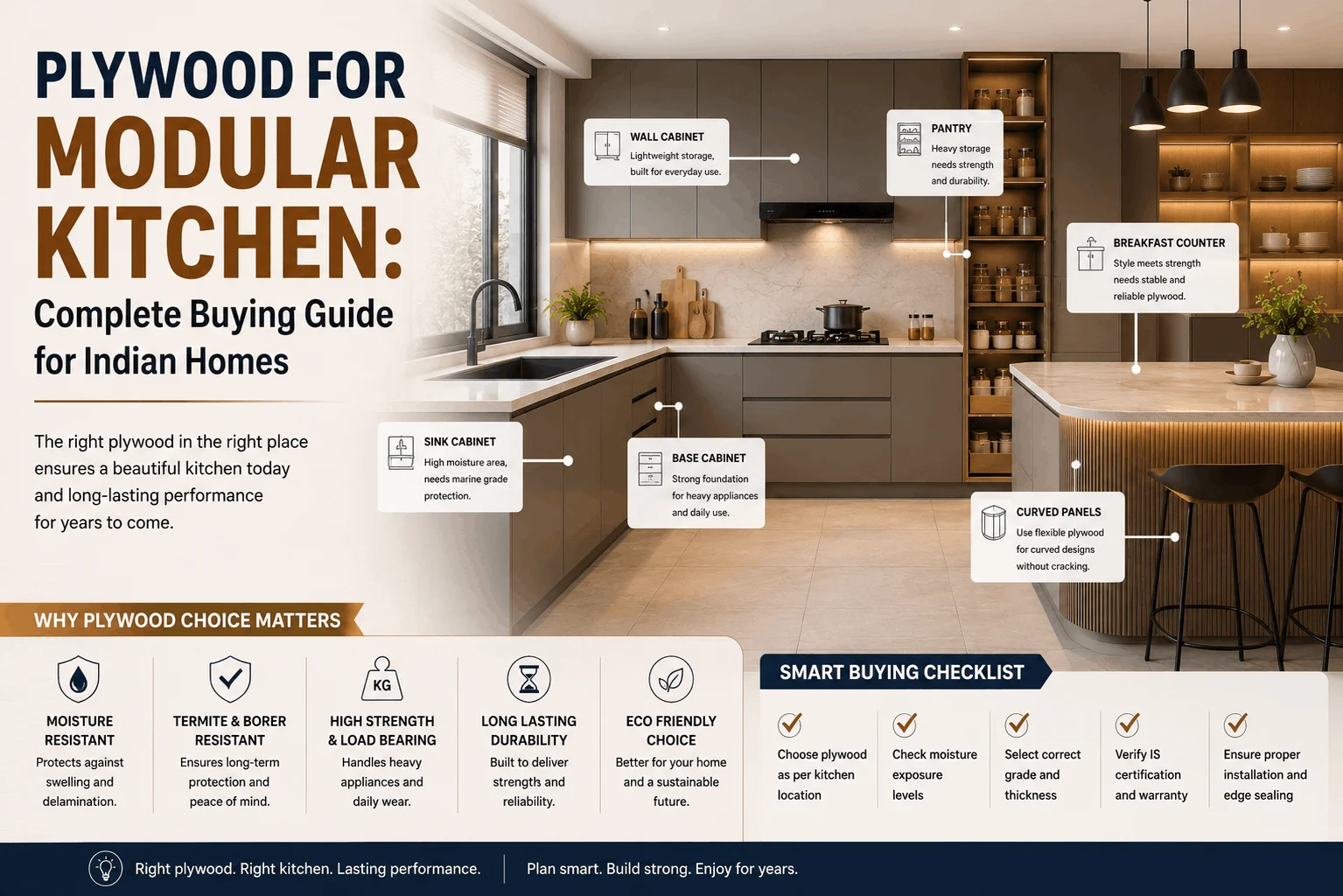
Why Modular Kitchens Need Different Types of Plywood?
Unlike wardrobes or living room furniture, kitchen cabinets are exposed to conditions that change throughout the day. Steam generated during cooking, plumbing connections, humidity and continuous daily use create different environments within the same kitchen.
For example:
- Areas close to plumbing may occasionally experience direct water exposure.
- Cabinets near the cooking zone remain exposed to steam and heat.
- Pantry storage usually stays dry.
- Decorative breakfast counters may require curved plywood.
- Certain commercial or institutional kitchens may require fire-retardant plywood.
Because these conditions vary, using one plywood product throughout the kitchen may not always be the most suitable approach. Selecting products according to the installation environment helps ensure the plywood matches the expected performance requirements.
Understanding Kitchen Conditions Before Choosing Plywood
Before comparing plywood grades, first identify the conditions your kitchen furniture will experience.
Direct Water Exposure
Some areas remain close to plumbing lines, water supply pipes or appliances where leakage may occur. These locations require plywood designed for prolonged moisture exposure.
High Humidity
Steam generated during cooking increases humidity inside the kitchen even when there is no direct water contact. Poor ventilation can further increase moisture levels inside cabinets.
Fire Safety Requirements
Commercial kitchens, restaurants, hotels and certain residential projects may require fire-retardant plywood depending on the architect’s or consultant’s specifications.
Dry Interior Conditions
Many cabinets remain away from water sources and only experience normal indoor conditions. Product selection in these areas depends on furniture design, expected load and project requirements.
Decorative Curved Designs
Modern kitchens increasingly include curved breakfast counters, islands and feature walls that require plywood specifically designed for bending applications.
Marine Grade vs BWR Grade vs MR Grade Plywood
Choosing between Marine Grade, BWR Grade and MR Grade plywood for modular kitchen is one of the most common challenges homeowners face while planning a modular kitchen. Although these products may appear similar externally, they are intended for different applications.
Understanding the difference helps ensure the plywood matches the conditions inside your kitchen instead of relying only on price or marketing terms.
| Feature | Marine Grade | BWR Grade | MR Grade |
|---|---|---|---|
| Intended Environment | Prolonged moisture exposure | Humid conditions | Dry interior conditions |
| Suitable for Direct Water Exposure | Yes | Limited | No |
| Suitable for Kitchen Steam | Yes | Yes | Dry areas only |
| Typical Residential Applications | Moisture-prone kitchen areas | Kitchens with moderate humidity | Dry kitchen furniture |
| Applicable Indian Standard | IS 710 | IS 303 | IS 303 |
Note: Product selection should always depend on the installation conditions and project specifications rather than selecting one plywood grade for the entire kitchen.
How to Select the Right Advance Ply Product?
Rather than selecting products according to individual cabinet names, first evaluate the conditions in which the plywood for modular kitchen will be used.
| Kitchen Condition | Suitable Advance Ply Products |
|---|---|
| Direct Water Exposure | Advance Ply Tungsten, Advance Ply Gold Marine, Advance Ply Palladium |
| Fire Safety Applications | Advance Ply Tungsten, Advance Ply Gold FR, Advance Ply Palladium |
| High Humidity | Advance Ply 710, Advance Ply Gold Marine |
| Dry Kitchen Furniture | Advance Ply Gold, Advance Ply PF, Advance Ply Gold MMR25 Plus, Advance Ply Gold MMR25, Advance Ply MMR10 Plus, Advance Ply MMR10 |
| Curved Decorative Furniture | Advance Ply Flexi |
This table should be used as the primary reference while planning a modular kitchen. Once the kitchen conditions have been identified, the appropriate product can be selected according to the project requirements rather than using the same plywood throughout.
Why Selecting Plywood Only by Price Can Be Costly?
Plywood is one of the most important structural materials inside a modular kitchen, yet many purchase decisions are still based primarily on cost. While reducing the initial budget may seem attractive, replacing damaged cabinets, repairing swollen panels or rebuilding furniture often costs significantly more than selecting the appropriate plywood at the beginning.
Instead of comparing only prices, homeowners should compare:
- Intended application
- Indian Standard certification
- Moisture resistance
- Fire-retardant properties where required
- Thickness
- Construction quality
- Warranty
- Long-term suitability for the installation environment
Looking beyond the purchase price helps create kitchen furniture that remains reliable for years.
Recommended Plywood Thickness for Modular Kitchens
Selecting the right plywood grade is only one part of building a durable modular kitchen. The thickness of the plywood for modular kitchen also influences the strength, stability and long-term performance of cabinets. Using unnecessary thickness can increase project costs, while insufficient thickness may affect the structural performance of the furniture.
There is no single plywood thickness suitable for every kitchen component. Cabinet size, hardware, shelf span and expected load should all be considered before finalising the material specification.
The table below provides general guidance for common modular kitchen applications:
| Kitchen Component | Common Thickness | Purpose |
|---|---|---|
| Cabinet Carcass | 18 mm | Provides structural support for modular kitchen cabinets. |
| Base Cabinets | 18 mm | Suitable for supporting countertops, shutters and daily kitchen use. |
| Wall Cabinets | 16–18 mm | Depends on cabinet size and storage requirements. |
| Pantry Units | 18 mm | Suitable for cabinets storing groceries and heavier kitchen items. |
| Shelves | 16–18 mm | Selected according to shelf span and expected load. |
| Cabinet Back Panels | 6–9 mm | Depends on cabinet construction and installation method. |
| Decorative Panels | 6–12 mm | Selected according to the interior design and finishing material. |
| Curved Decorative Features | 5–11 mm | Advance Ply Flexi is designed for curved furniture and decorative applications. |
Points to Consider Before Selecting Thickness
- Larger cabinets generally require stronger structural support.
- Long shelves carrying heavy utensils should be designed with suitable thickness and support spacing.
- Decorative panels often require thinner plywood than structural furniture.
Cabinet design and hardware quality influence overall furniture performance as much as plywood thickness.
10 Common Mistakes Homeowners Make While Buying Kitchen Plywood:
Most homeowners purchase plywood only once or twice during the construction of their home. As a result, decisions are often based on price, dealer recommendations or marketing claims instead of technical suitability. Avoiding the following mistakes can help improve the long-term performance of your modular kitchen.
1. Buying Plywood Without Understanding the Kitchen Environment
Different kitchens experience different levels of humidity, moisture and heat. Selecting plywood for modular kitchen without evaluating these conditions may lead to choosing a product that is not appropriate for the project.
2. Comparing Only the Price
The lowest-priced plywood is not always the most economical choice over the life of the kitchen. Consider product specifications, intended application, certification and warranty in addition to cost.
3. Assuming Every Waterproof Plywood Is the Same
Terms such as waterproof, water-resistant and Marine Grade are often used interchangeably in the market. Instead of relying on these descriptions alone, verify the product category and applicable Indian Standard.
4. Ignoring Indian Standard Certification
Certification helps identify the intended application of a plywood product. Always review the product specifications before making a purchase.
5. Selecting Thickness Without Considering Furniture Design
Using the same plywood thickness for every cabinet may not always provide the best results. Cabinet dimensions, expected load and hardware should influence thickness selection.
6. Ignoring Ventilation
Poor ventilation increases humidity inside the kitchen. Even when there is no direct water exposure, continuous steam can influence furniture performance over time.
7. Overlooking Installation Quality
Correct installation, proper alignment, suitable hardware and accurate edge finishing contribute significantly to the life of kitchen furniture.
8. Ignoring Edge Protection
Open edges around plumbing or electrical cut-outs should be properly finished during fabrication to reduce moisture penetration.
9. Selecting Hardware Only by Appearance
Premium plywood performs best when paired with quality hinges, drawer runners and fasteners designed for long-term use.
10. Purchasing Without Comparing Product Specifications
Instead of asking for “the best plywood,” compare products based on:
- Intended application
- Applicable Indian Standard
- Product features
- Moisture resistance
- Fire-retardant properties where required
- Thickness
- Warranty
- Project requirements
How to Verify the Right Plywood for Modular Kitchen Before Buying?
Many plywood sheets look similar from the outside, making it difficult for homeowners to identify the correct product through appearance alone. The most reliable approach is to review the product specifications before the furniture fabrication begins.
Before confirming your purchase, verify the following details:
- Product name
- Applicable Indian Standard
- Intended application
- Product thickness
- Warranty
- Manufacturer details
- Dealer invoice
- Project specification
Rather than asking the dealer for “waterproof plywood,” ask which Advance Ply product has been specified for your project and whether it matches the installation conditions.
Questions to Ask Before Finalising Your Modular Kitchen
Before approving the material list, discuss the following points with your contractor, carpenter or interior designer.
- Which Advance Ply products have been specified for the project?
- Why were these products selected?
- Does the product match the expected moisture conditions?
- Does the project require fire-retardant plywood?
- Which plywood thickness will be used for cabinet construction?
- Which Indian Standard applies to the selected products?
- Has the warranty been mentioned in the quotation?
- Are all exposed cut edges being properly finished during installation?
These questions help ensure the selected plywood matches the project requirements before manufacturing begins.
Expert Advice for Homeowners
When selecting plywood for modular kitchen, compare the installation environment, expected service life, furniture design and project requirements before finalising the product. Choose the appropriate Advance Ply plywood grade according to water exposure, humidity, fire-safety needs and whether the application is dry, moisture-prone or curved.
For better clarity, ask your architect. interior designer, contractor or authorised Advance Ply dealer to mention the exact product name, grade, thickness, applicable Indian Standard and warranty in the quotation before fabrication begins.
The most successful modular kitchens are those where the correct Advance Ply product is matched to the actual working conditions instead of using the same specification throughout the project.
Advance Ply Product Range for Modular Kitchens
Every modular kitchen is designed differently, which is why Advance Ply manufactures multiple plywood products instead of recommending one solution for every project. Each product is developed for specific applications and performance requirements, allowing architects, interior designers, contractors and homeowners to select materials according to the project specifications.
Below is a brief overview of the Advance Ply products commonly considered during modular kitchen planning:
| Advance Ply Product | Product Overview |
|---|---|
| Advance Ply Tungsten | Premium Marine Grade plywood with fire-retardant properties for projects requiring high moisture resistance and fire safety. |
| Advance Ply Palladium | Premium plywood combining Marine Grade performance with fire-retardant properties. |
| Advance Ply Gold Marine | IS 710 Marine Grade plywood designed for prolonged moisture exposure. |
| Advance Ply 710 | BWR Grade plywood suitable for interior applications exposed to higher humidity. |
| Advance Ply Gold | MR Grade plywood for dry interior furniture applications. |
| Advance Ply PF | Interior plywood suitable for residential and commercial furniture according to project requirements. |
| Advance Ply Gold MMR25 Plus | MR Grade plywood offering 25% higher moisture resistance than standard MMR products. |
| Advance Ply Gold MMR25 | MR Grade plywood developed for improved moisture resistance in dry interior applications. |
| Advance Ply MMR10 Plus | MR Grade plywood with 10% higher moisture resistance for interior furniture. |
| Advance Ply MMR10 | Interior MR Grade plywood suitable for furniture in dry conditions. |
| Advance Ply Gold FR | Fire-retardant plywood for projects requiring improved fire performance. |
| Advance Ply Flexi | Flexible plywood designed for curved furniture, designer islands, breakfast counters and decorative panels. |
Choosing among these products should always depend on the project requirements rather than selecting the highest specification for every application.
Simple Maintenance Tips to Increase Kitchen Furniture Life
Selecting the right plywood is only one part of building a long-lasting modular kitchen. Daily maintenance also contributes to the overall performance of kitchen furniture.
1. Inspect Plumbing Regularly
Hidden plumbing leaks are one of the most common reasons cabinets deteriorate over time. Periodically inspect water supply lines and drainage connections.
2. Keep the Kitchen Well Ventilated
Use the chimney or exhaust fan during cooking to reduce the build-up of steam and humidity inside the kitchen.
3. Clean Water Spills Promptly
Avoid allowing water to remain on cabinet surfaces or inside storage units for long periods.
4. Avoid Overloading Shelves
Store heavy utensils and appliances evenly across shelves to minimise unnecessary stress on the furniture.
5. Check Hardware Periodically
Inspect hinges, drawer runners and screws to ensure smooth operation and prevent unnecessary movement of cabinet panels.
6. Repair Minor Problems Early
Loose laminates, damaged edge bands and small plumbing leaks should be repaired promptly before they affect the plywood underneath.
Conclusion
Choosing plywood for a modular kitchen is about understanding the environment in which the furniture will perform. Water exposure, humidity, fire-safety requirements, furniture design and expected service life all influence which plywood product is appropriate for a project.
Rather than selecting one plywood grade for every cabinet, it is better to evaluate the kitchen conditions first and then choose products that match those requirements. This approach helps improve long-term furniture performance while ensuring the material is used where it is most suitable.
Advance Ply offers a comprehensive range of engineered plywood products for modular kitchens, including Marine Grade, BWR Grade, MR Grade, Fire Retardant and Flexible Plywood. By comparing project requirements with the intended application of each product, homeowners, architects, interior designers and contractors can make informed decisions before furniture fabrication begins.
Planning the correct plywood specification at the design stage is one of the simplest ways to build a modular kitchen that remains reliable for years while reducing unnecessary maintenance and replacement costs.
Frequently Asked Questions About Plywood for Modular Kitchen
Which plywood is suitable for a modular kitchen?
The appropriate plywood depends on the installation conditions. Kitchens exposed to direct water, high humidity or specific fire-safety requirements may require different products. Dry kitchen furniture may require a different specification from moisture-prone areas. Product selection should always follow the project requirements.
Is Marine Grade plywood required throughout the kitchen?
Not necessarily. Marine Grade plywood is generally considered where prolonged moisture exposure is expected. The final selection depends on the installation environment rather than using the same plywood throughout the kitchen.
Does every modular kitchen require fire-retardant plywood?
No. Fire-retardant plywood is typically specified for projects where additional fire safety is required. The requirement depends on the project specifications rather than being mandatory for every residential kitchen.
What plywood thickness is commonly used in modular kitchens?
Thickness varies according to the cabinet design and structural requirements. Cabinet carcasses commonly use 18 mm plywood, while back panels and decorative applications may require different thicknesses.
How can I verify the plywood before fabrication starts?
Check the product name, applicable Indian Standard, thickness, warranty and project specification before approving the material list. Purchasing through an authorised Advance Ply dealer also helps ensure the specified product is supplied.
Can one plywood product be used for every cabinet?
Different parts of a kitchen may experience different environmental conditions. Product selection should therefore match the actual installation environment rather than using a single plywood product throughout.
Is thicker plywood always better?
No. Appropriate thickness depends on cabinet dimensions, furniture design, expected load and structural requirements. Selecting unnecessary thickness may increase project cost without improving performance.
Why should kitchen plywood be selected according to conditions instead of furniture types?
The same type of cabinet may perform differently depending on where it is installed. Moisture, humidity and fire-risk requirements influence product selection more than the furniture name itself.
Can curved kitchen furniture be made using standard plywood?
Standard plywood is intended for flat surfaces. Curved breakfast counters, decorative islands and feature panels generally require flexible plywood designed specifically for bending applications.
What should homeowners compare before purchasing plywood for modular kitchen?
Instead of comparing only price, homeowners should evaluate the intended application, applicable Indian Standard, product features, thickness, warranty and overall suitability for the project.